Your Cart (0)

Your cart is empty
Envío calculado al finalizar la compra

Drawer menu
Envío calculado al finalizar la compra
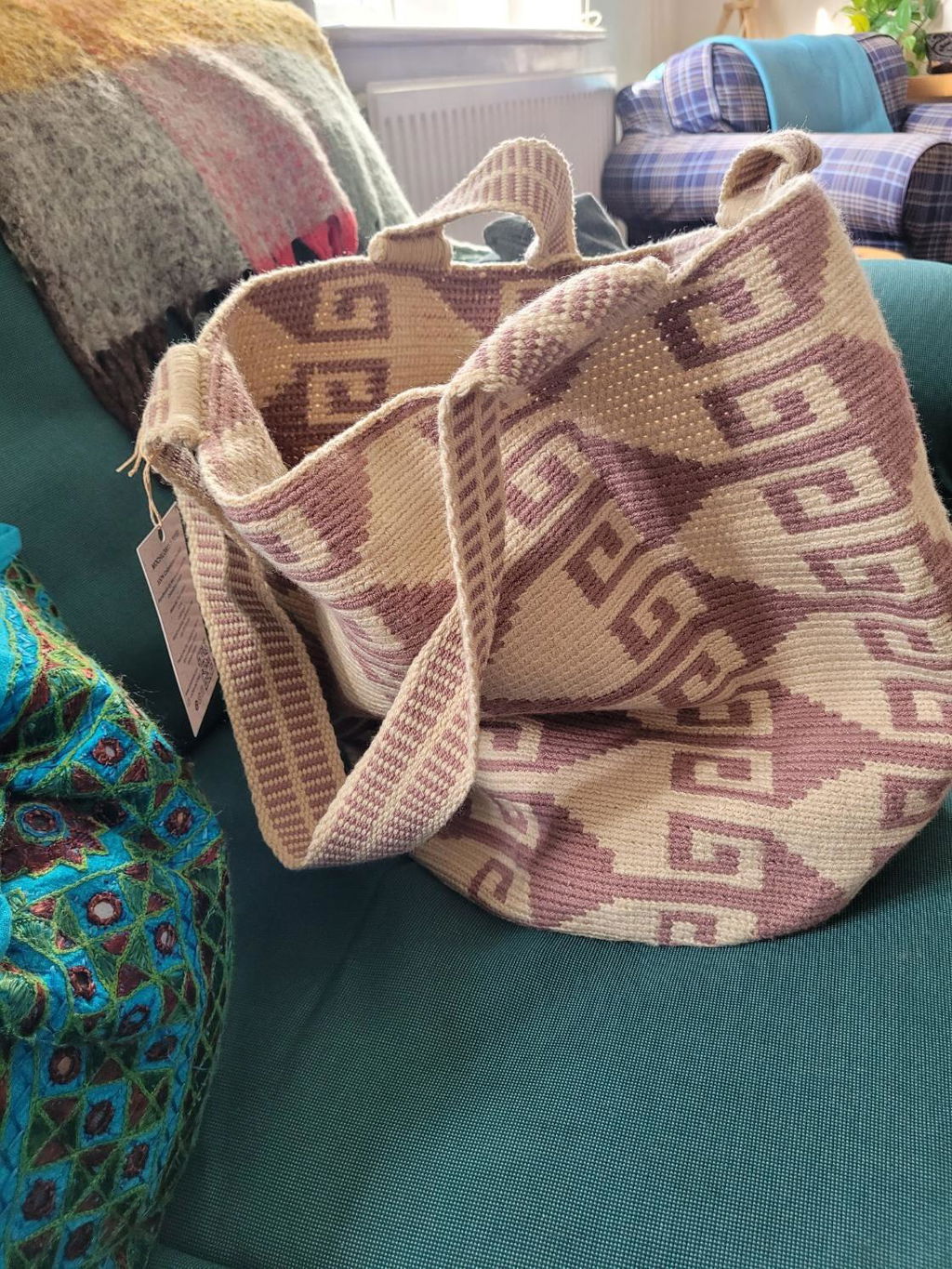
When we look at a Wayuu mochila, we often admire the vibrant colors and patterns woven by women. However, behind every piece lies a story of family collaboration: the creation of the "gasa" (strap), a task traditionally led by the men of the community.
While women crochet the body of the bag, men use a traditional loom to bring the straps to life. This process is no small detail; it is the backbone of the mochila. Using flat-weaving techniques and incredible precision in thread tension, these men transform fibers into intricate, heavy-duty bands. This work requires a unique blend of strength and patience to ensure the bag supports the weight of daily life without losing its shape.
In Wayuu culture, weaving is a language spoken by the entire community. The man’s participation in creating the straps represents:
Balance: The harmony between the delicate weave of the bag's body and the robust structure of the strap.
Legacy: Fathers teach their sons to master the loom from a young age, keeping an ancestral technique alive.
Support: It symbolizes collective effort; a piece is never truly complete without the work of the other.
At AMPMsis, we value this union. The strap resting on your shoulder isn't just a strip of fabric; it is the result of hours of labor on a rustic loom under the sun of La Guajira. It is what makes your mochila durable, functional, and urban—ready to accompany you from day to night.
The next time you adjust your bag, remember that you are carrying the soul and the strength of an entire community.
____________________________________________________________
Weaving is one of the oldest crafts in the world and, today more than ever, it represents a form of authentic craftsmanship that connects history, identity, and creativity. What began as a need for warmth and protection evolved over time into a cultural language: every stitch and every thread holds memory, tradition, and the skill of experienced hands.
In many artisan communities in Colombia, weaving is much more than a technique—it is a symbol of belonging and a deep connection to the land. Using fibers like cotton, wool, and other natural materials, artisans turn colors and patterns into visual stories that express their culture’s worldview. That’s why a woven piece can carry the story of a people, a family, and even a dream.
The value of artisan weaving isn’t only in the finished result, but in the process. Weaving is patient, detailed work in a fast-paced world—a practice that invites us to appreciate what is handmade, the dedication behind it, and the unique beauty of imperfection. Each creation holds hours of focus, technique, and love—something no factory can truly replicate.
In a market dominated by mass production, choosing a handwoven product means choosing quality, authenticity, and tradition. Whether it’s a scarf, a blanket, or a handwoven bag, you’re not just buying an accessory—you’re carrying a living heritage that bridges past and present, honoring those who continue to shape everyday beauty with their hands.